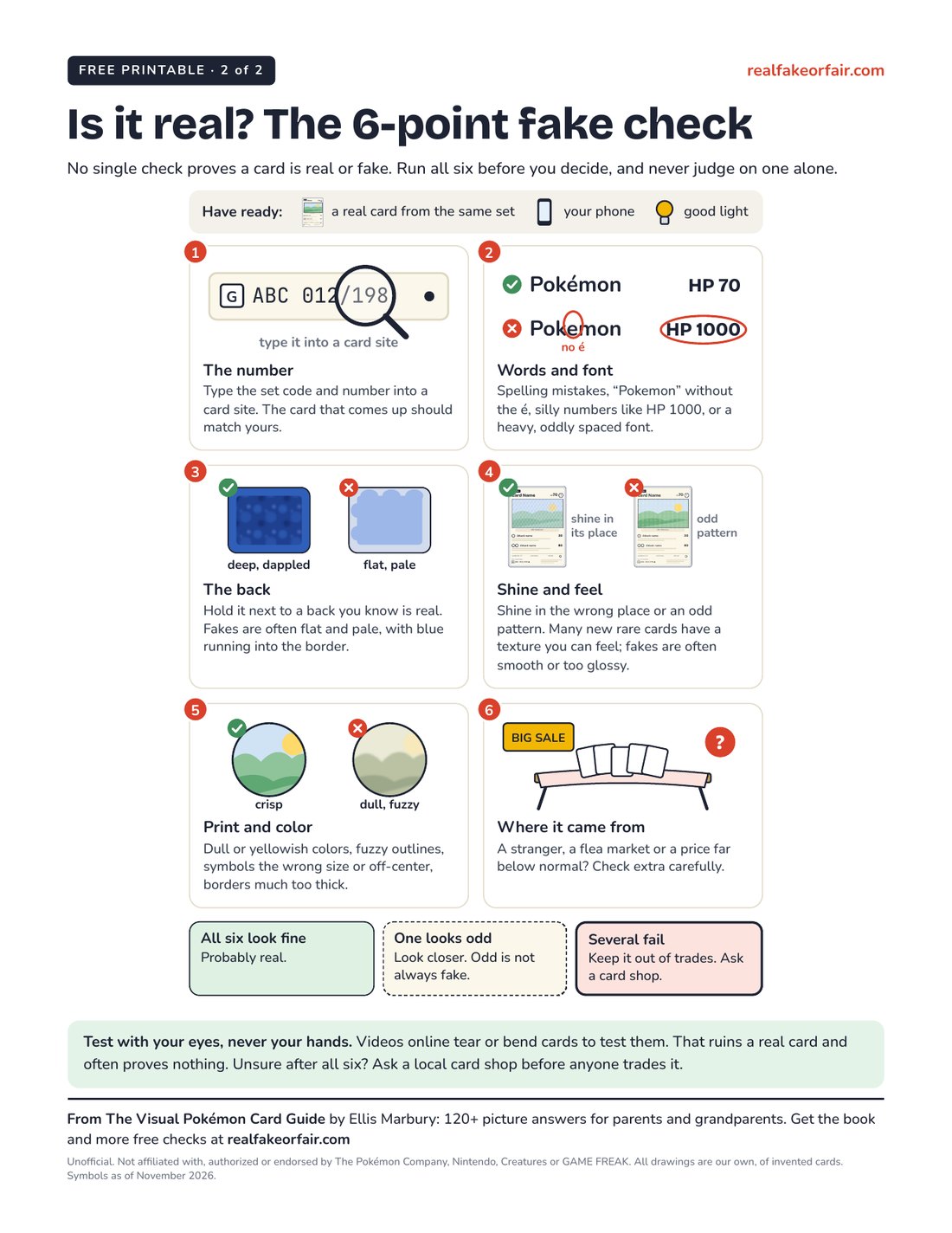
The six checks
1. The number
Type the set code and number into a card site. The card that comes up should match yours.
2. Words and font
Spelling mistakes, “Pokemon” without the é, silly numbers like HP 1000, or a heavy, oddly spaced font.
3. The back
Hold it next to a back you know is real. Fakes are often flat and pale, with blue running into the border.
4. Shine and feel
Shine in the wrong place or an odd pattern. Many new rare cards have a texture you can feel; fakes are often smooth or too glossy.
5. Print and color
Dull or yellowish colors, fuzzy outlines, symbols the wrong size or off-center, borders much too thick.
6. Where it came from
A stranger, a flea market or a price far below normal? Check extra carefully.
How to score it
Test with your eyes, never your hands
Videos online tear, bend or burn cards to test them. Those tests ruin a real card and often prove nothing. A "fake" your child owns might be real.
Fakes don't stop at cards
Resealed packs, fake graded cases with a real-looking number, and online shops that vanish after the payment are all common. The book has a page on each, with the red flags to look for.
Real, rare, worth it, fair?
The Visual Pokémon Card Guide answers all four in pictures, for parents and grandparents who don't play: 130 pages, 120+ diagrams.