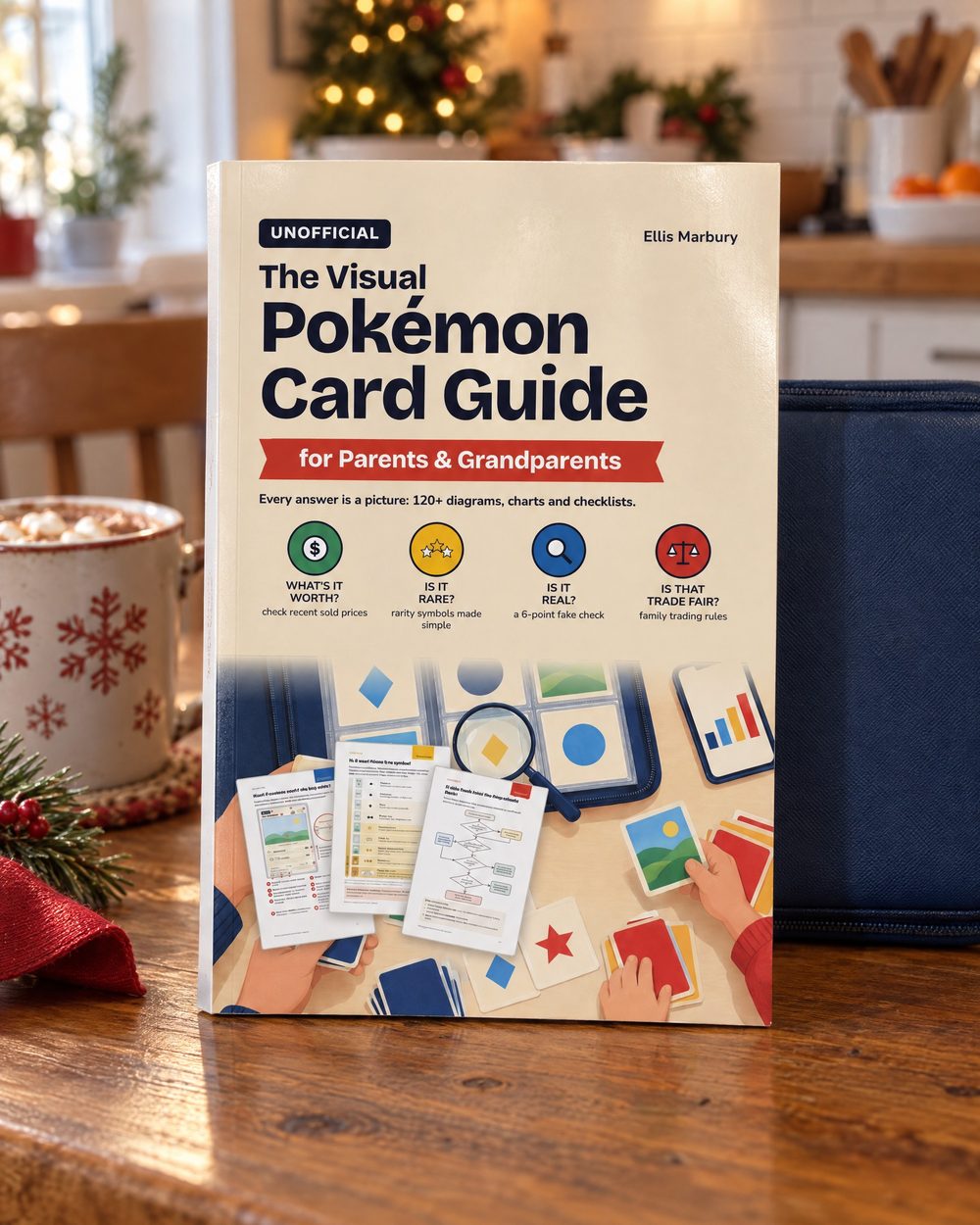
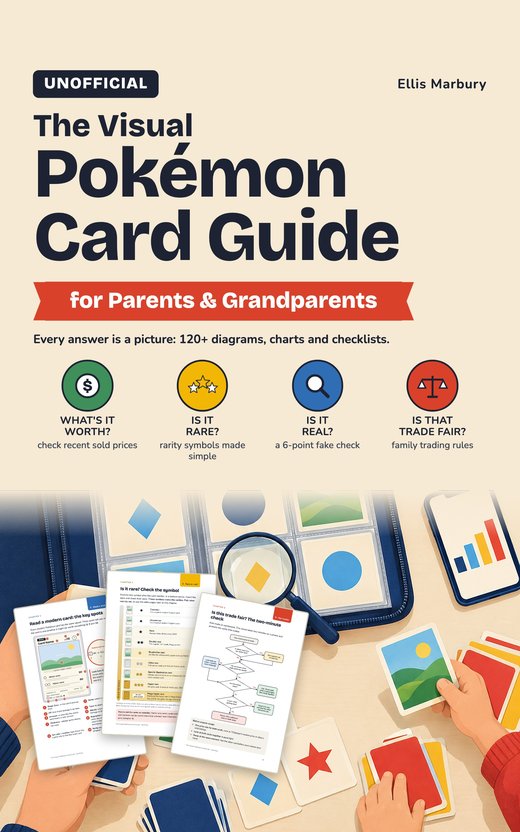
Is it real? Is it rare? What's it worth? Was that trade fair? 130 pages of picture answers you can look up in seconds, at the kitchen table or in the store.


Real questions parents and grandparents posted in Pokémon card groups this year:
Kids pick this up on the playground. Nobody explains it to the grown-ups. This book does, one picture at a time.
Every chapter has its own colored tab: rare, real, worth, trades, buying, playing.
Each page answers one question with a drawing, chart or flowchart. No walls of text.
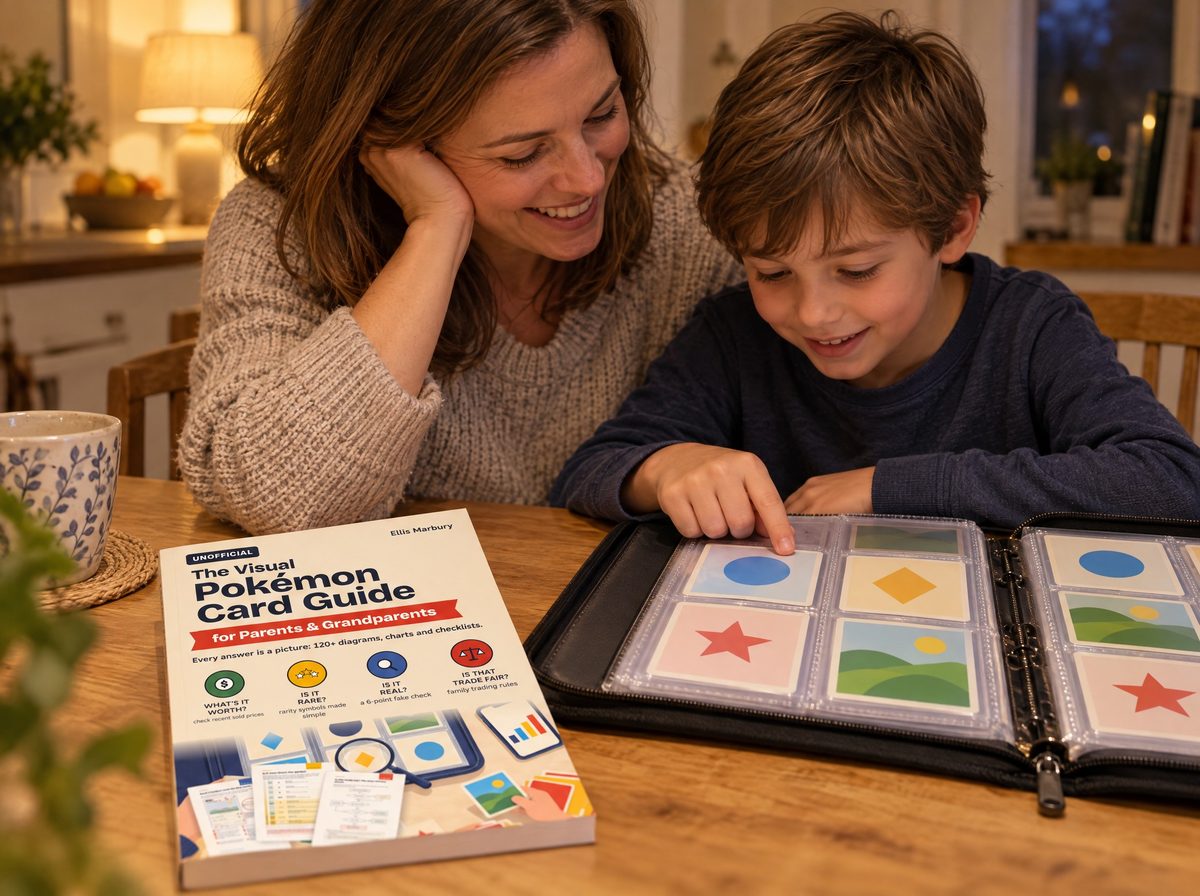
Check the card with your kid, then agree what to keep, trade or look up.
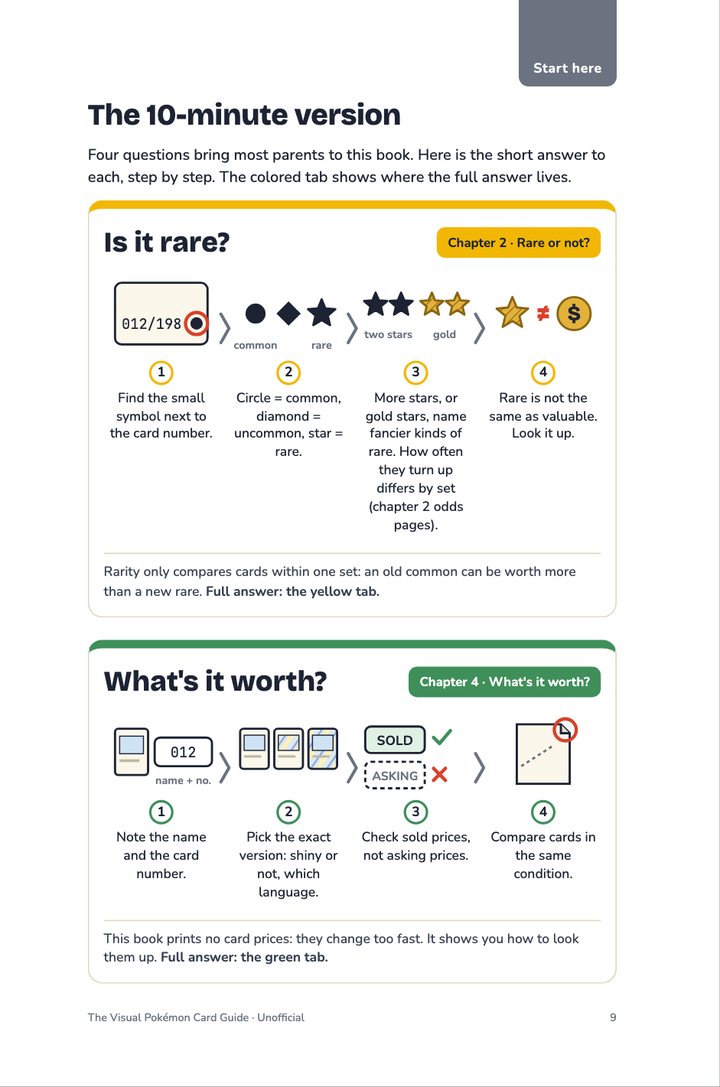
The 10-minute version for busy parents

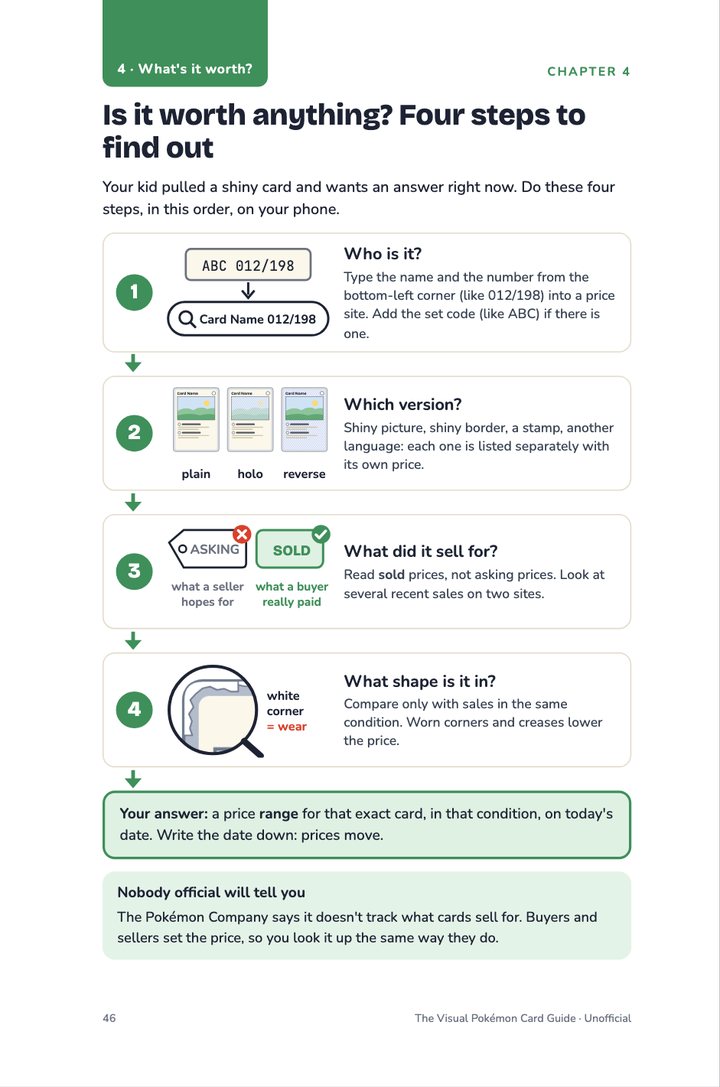
Is it worth anything? Four steps

Your kid runs in with a card. Here's the route the book walks you through:


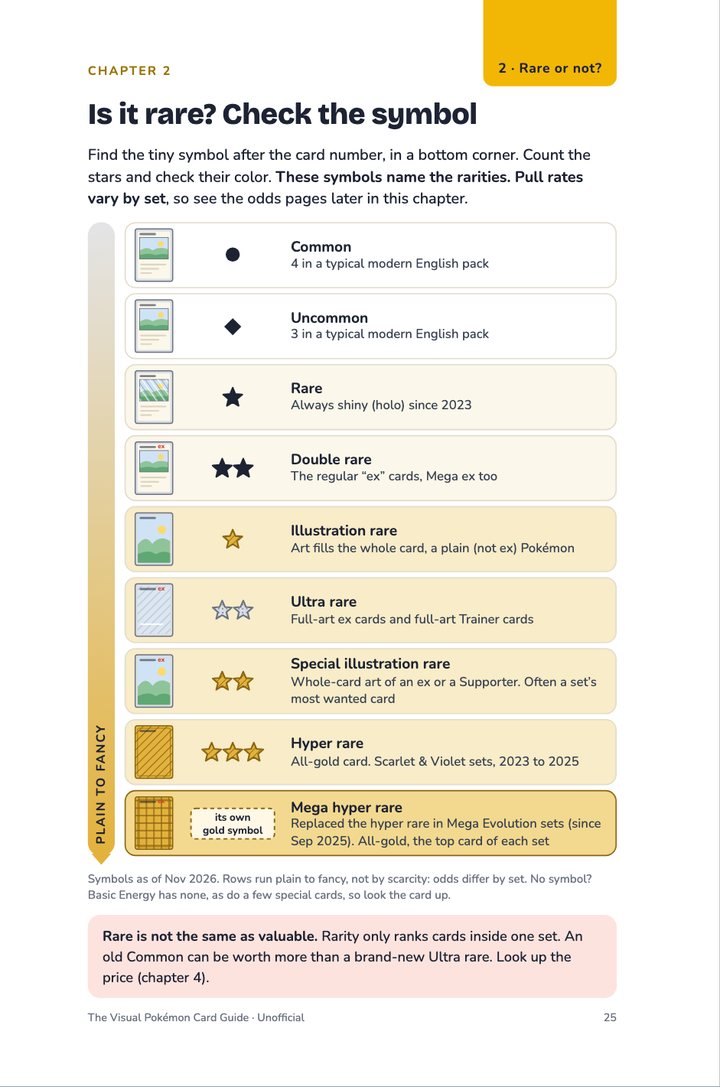
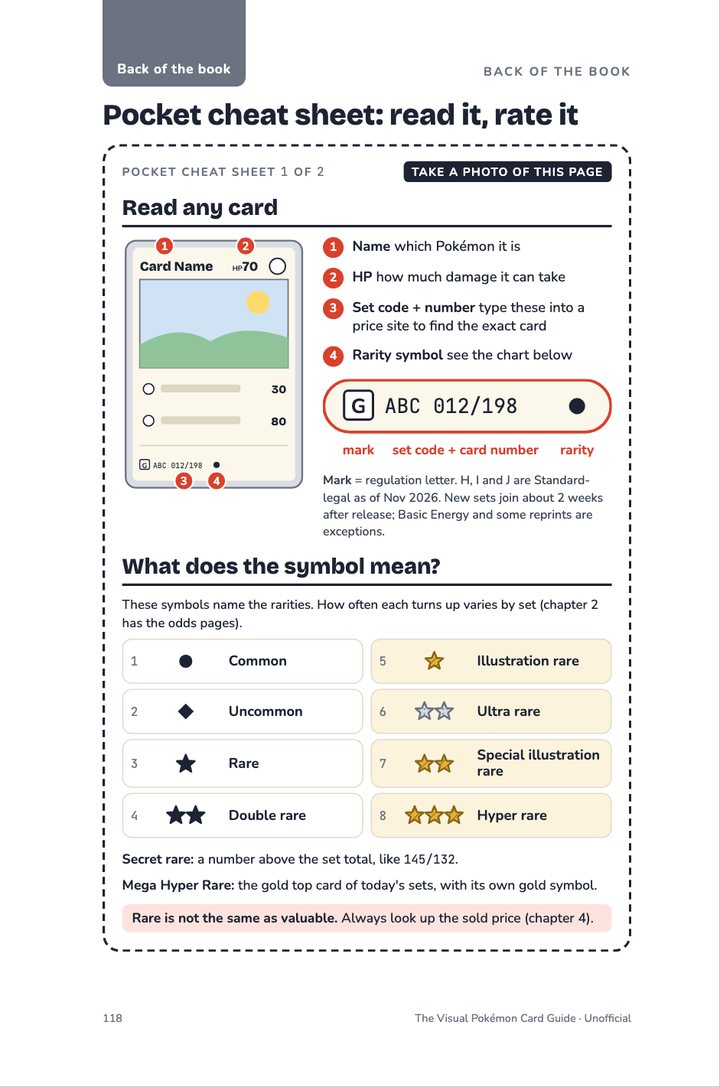
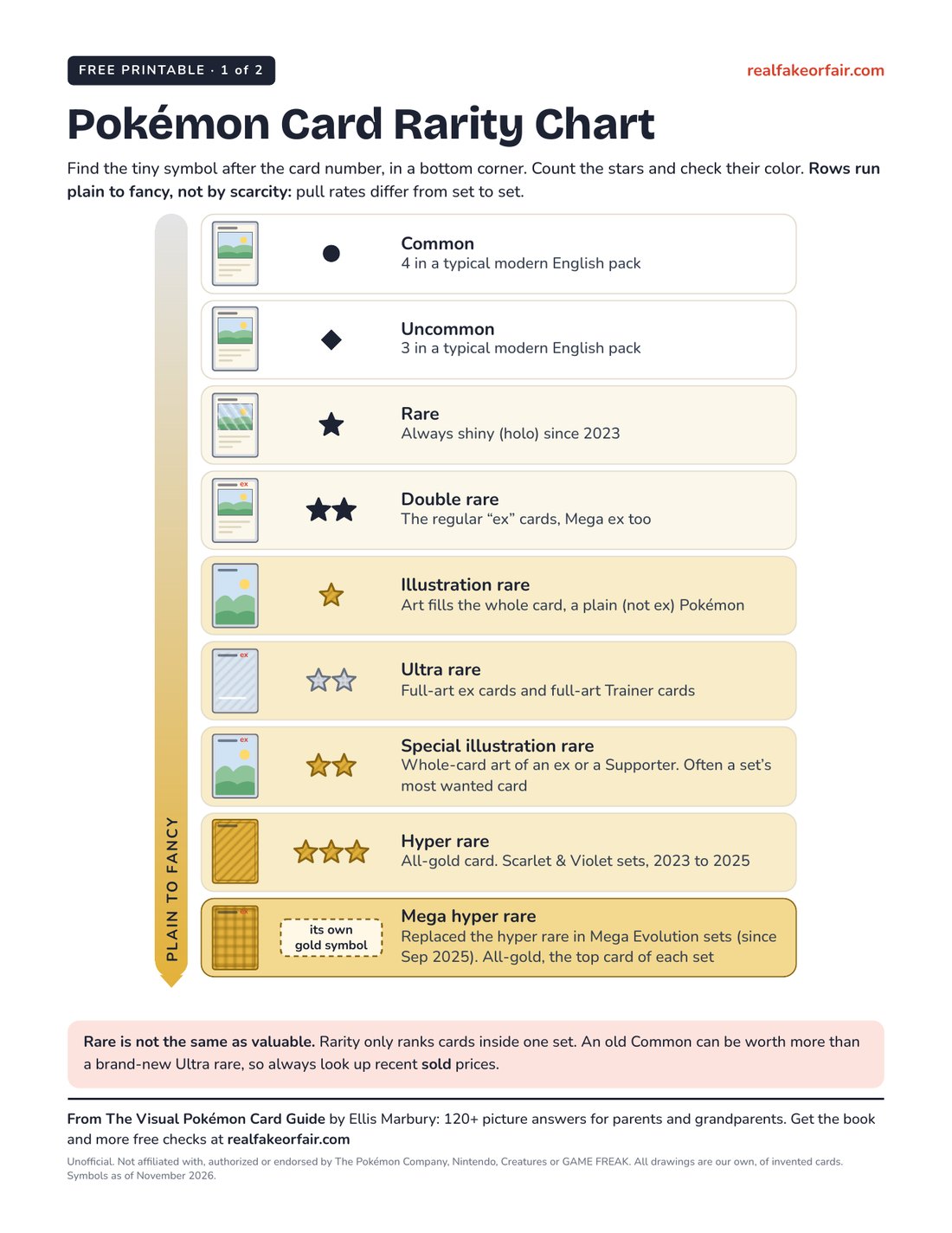
Every rarity symbol in one picture, plus the 30-second rare-or-not check and the real odds of pulling a big card.

Four steps to the real price: recent sold listings, not the hopeful asking prices. Condition and grading made simple.

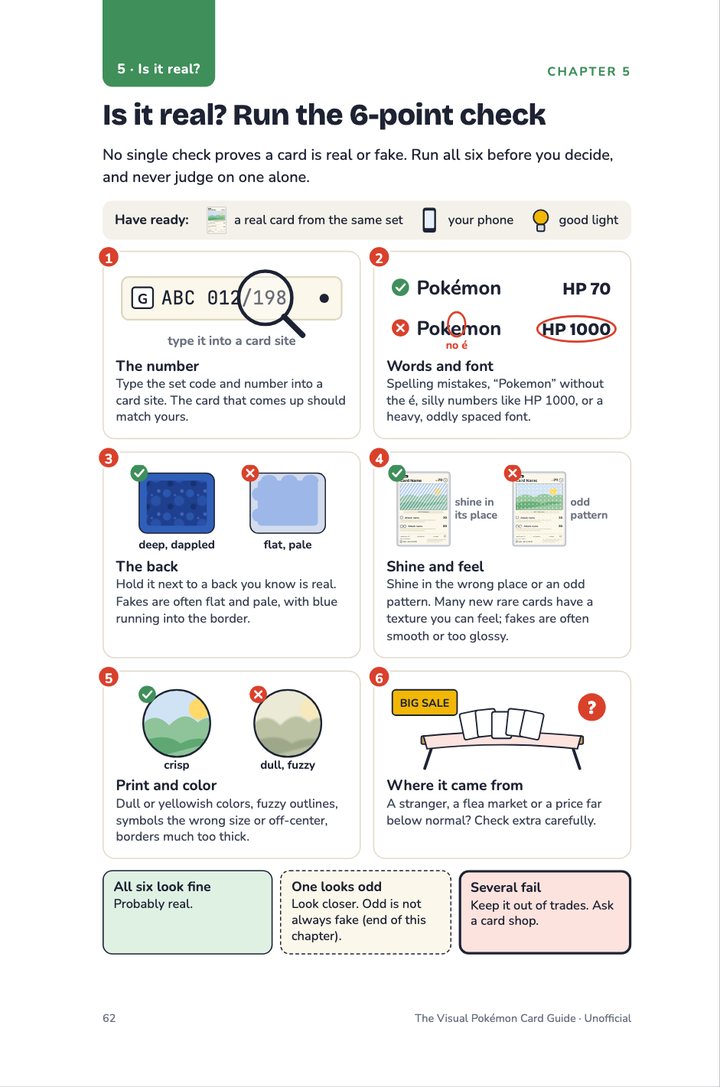
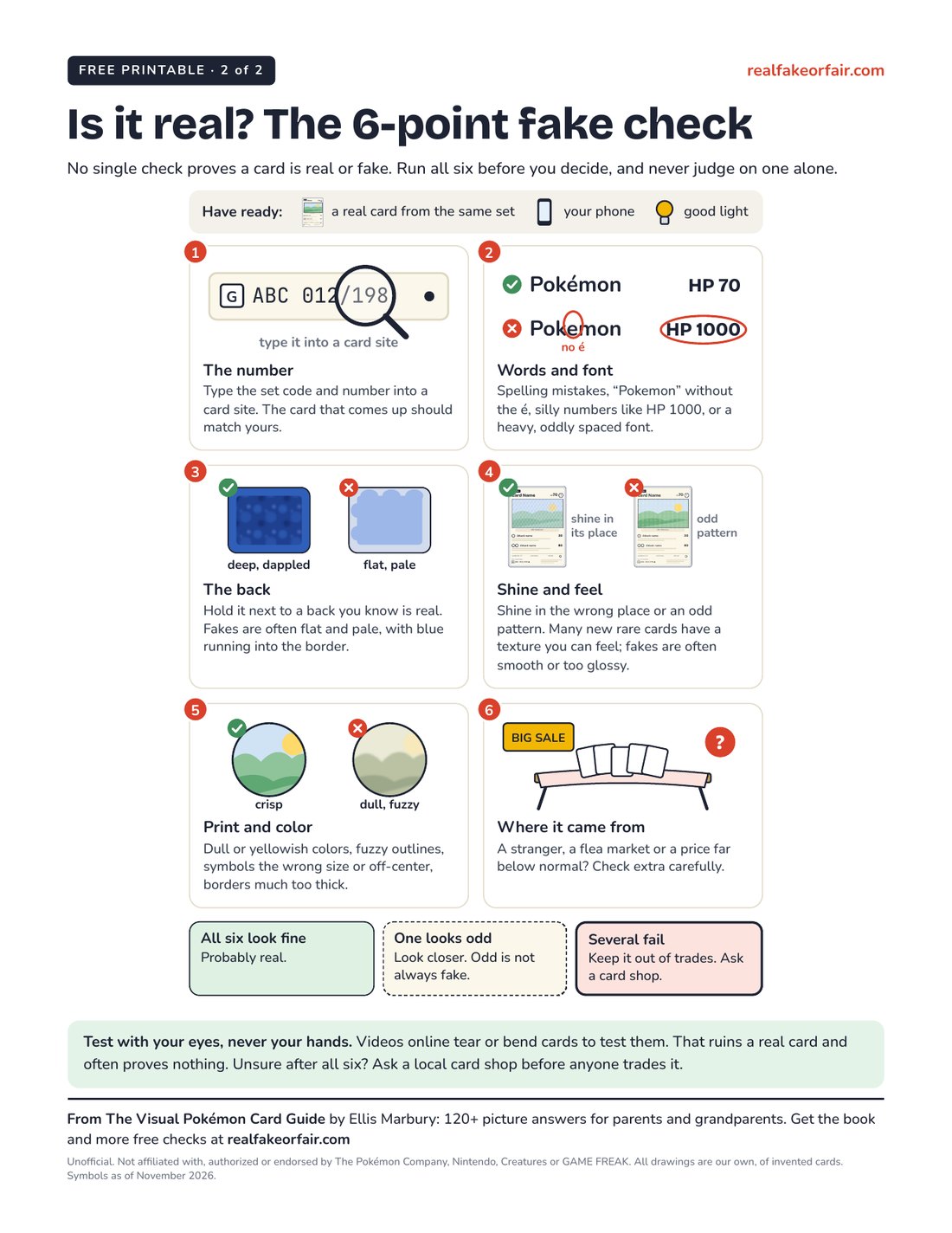
The 6-point fake check, plus fake packs, fake graded cases and online scams.

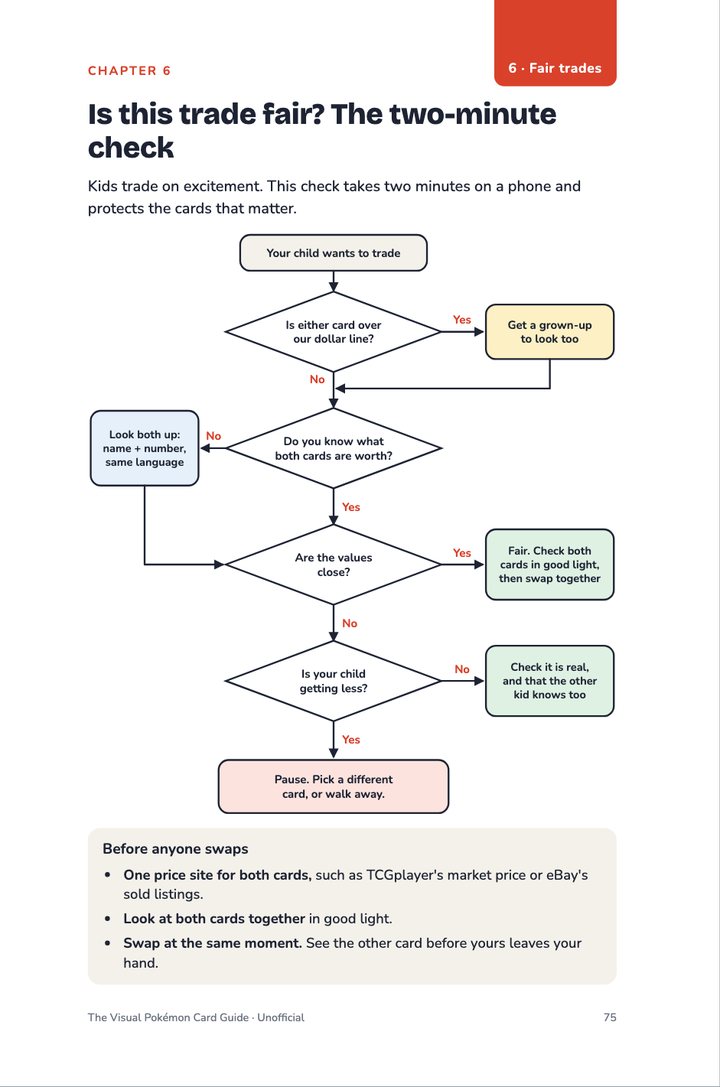
A two-minute trade check, red flags, and what to say after a bad trade.

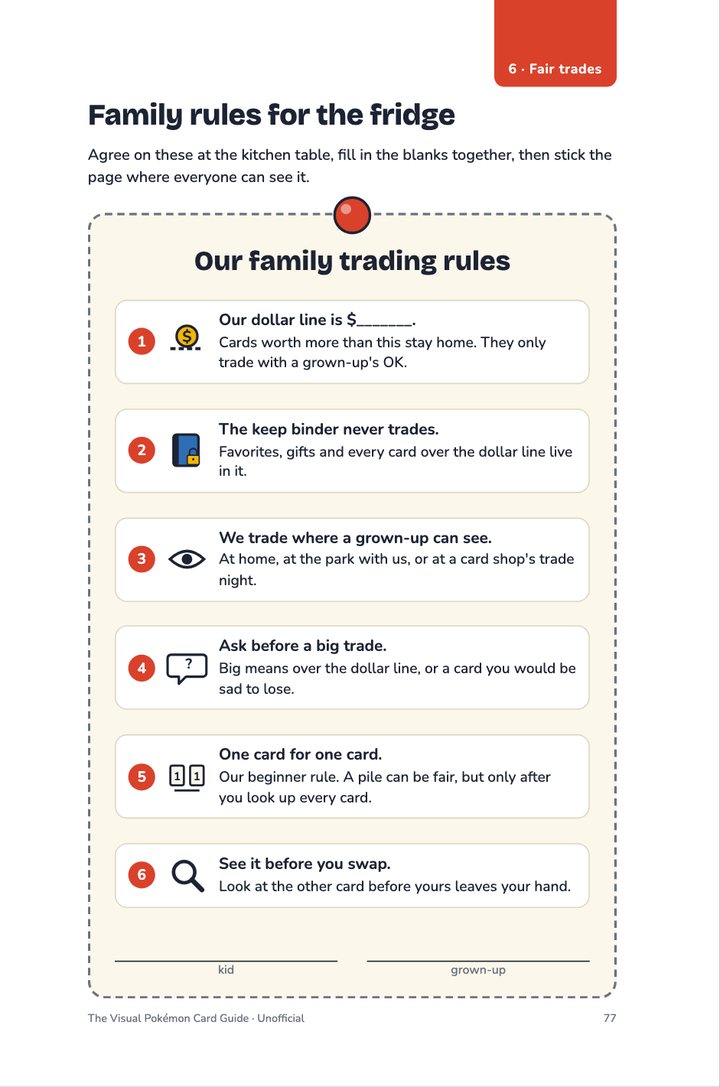
Fill in the blanks together: your dollar line, the keep binder, where trades happen.

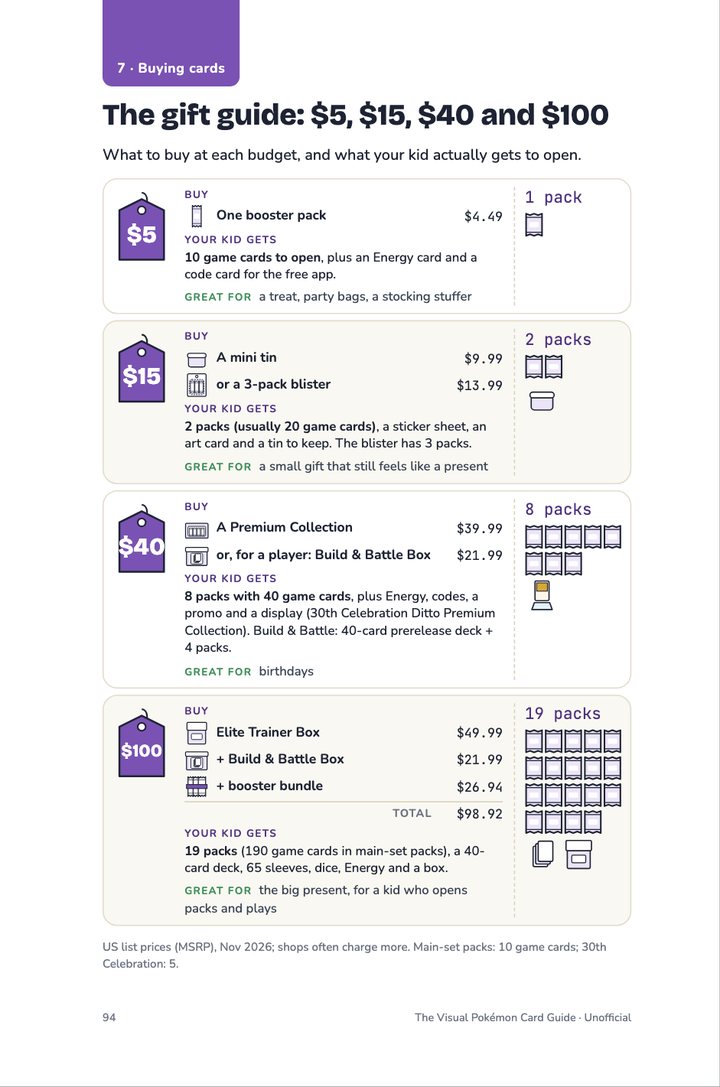
What to buy at $5, $15, $40 and $100, what's in each box, and the gift traps to skip.

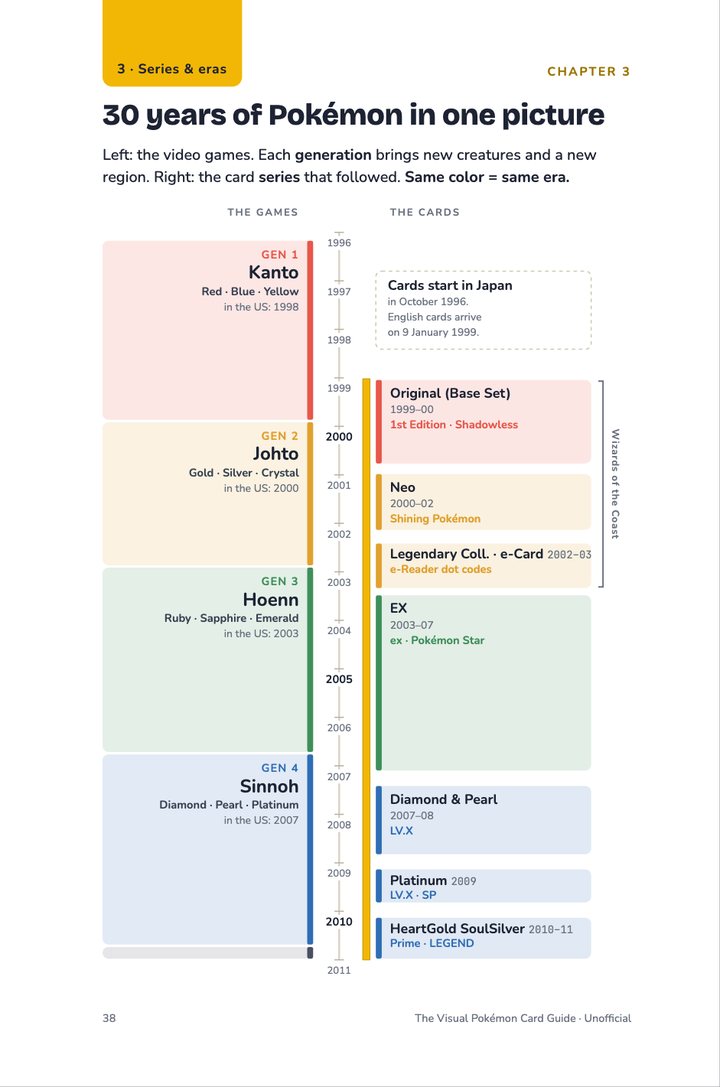
The card series on one timeline, and how to date a card, including your own from 1999.

Two pages to photograph and keep on your phone for the card shop or the school-yard trade.

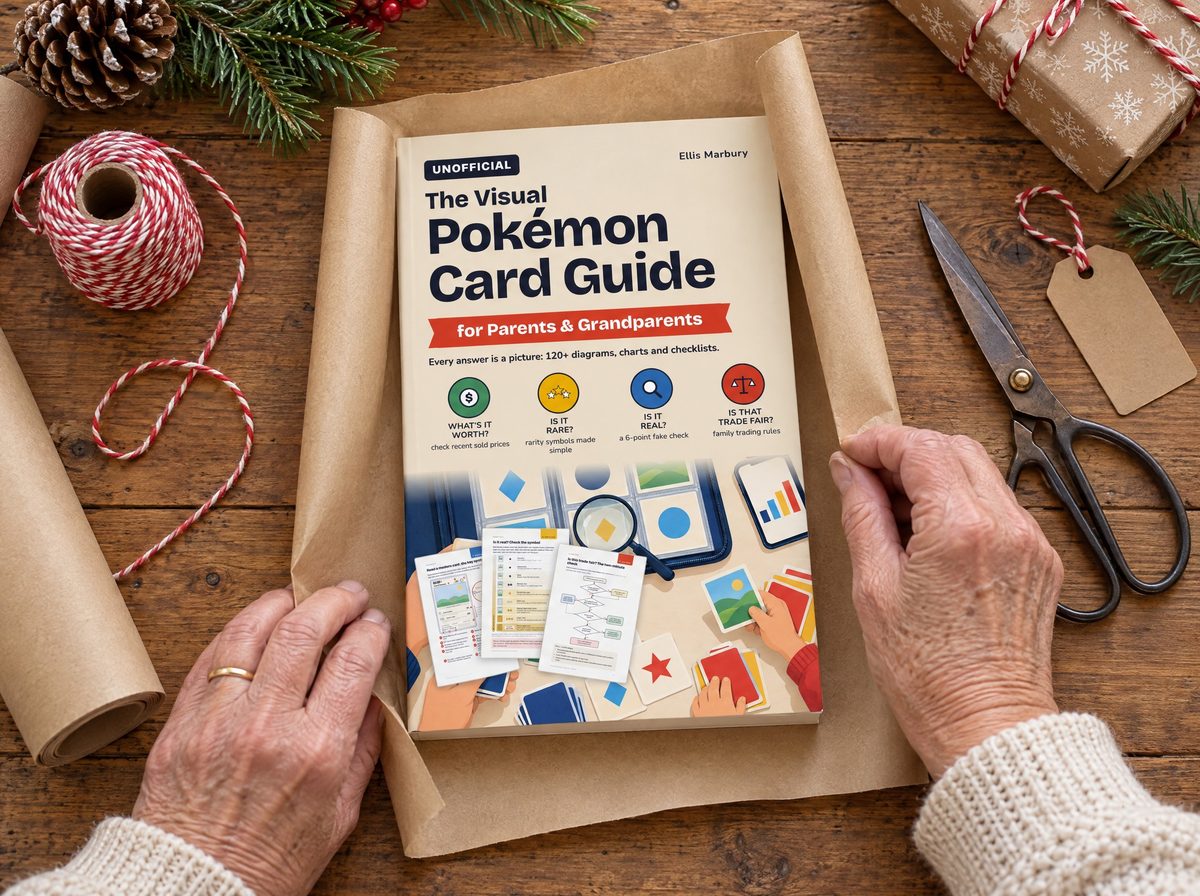
Pokémon cards will be under a lot of trees this year. Put this book next to them, for the parent or grandparent who gets asked "Is this one rare?" on Christmas morning.
Inside there's a gift guide at $5, $15, $40 and $100, so you buy the right box the first time and skip the scalper prices.
Two pages straight from the book. Print them for the fridge or keep them on your phone for the next trade.
DOWNLOAD THE FREE PDF ↓
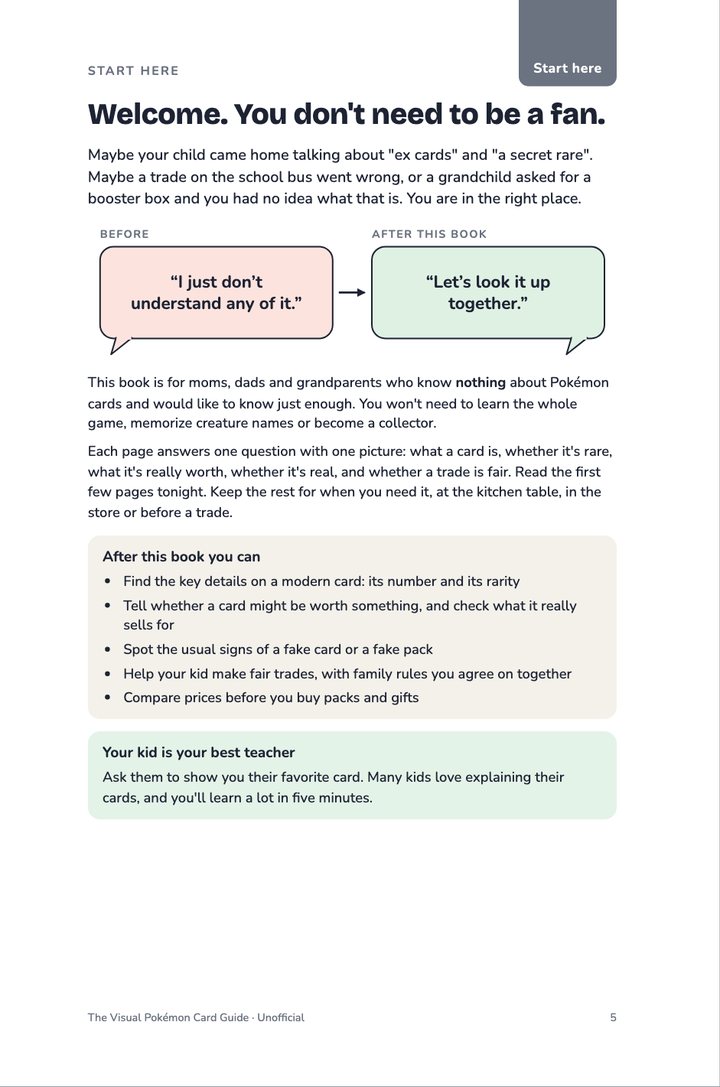
This book won't turn you into a collector. You don't need to learn the game or a single creature name.
It gives you just enough to ask good questions, check the answer in a picture, and say the six best words a Pokémon parent knows: "Let's look it up together."
No. It's an independent, unofficial guide, not affiliated with The Pokémon Company, Nintendo, Creatures or GAME FREAK. There are no card images or characters inside: every picture is our own drawing of an invented card.
It shows you how to find out in four steps, using recent sold listings. It never prints a price list, because card prices change every week and a printed list would be wrong by the time you read it.
Moms, dads and grandparents of kids around 6 to 12, including parents who collected in 1999 and feel lost in today's cards. You don't need to know anything to start.
On Amazon now: Kindle edition $2.99 · paperback $14.99 coming soon. The pages are full-color pictures, so on Kindle the book reads best on a tablet, phone or computer with the free Kindle app, not on a basic black-and-white Kindle.
New kinds of rare cards keep arriving, so the symbol pages are marked "as of November 2026". Everything else teaches you how to look things up for yourself, which doesn't go out of date.
Ellis Marbury is a pen name. The book was written with AI help, built from a file of sourced facts (card makers' help pages, price sites and grading companies) and checked in several review rounds.
Real or fake, rare or not, worth it or not, fair or not: 120+ picture answers in one book.